
Few items of clothing have sparked as much debate, fascination, and reinvention as the bikini. Since its official debut in the summer of 1946, this small yet powerful garment has occupied an outsized place in global fashion, pop culture, and sociopolitical discourse. The bikini is far more than swimwear. It is a mirror of shifting cultural norms, an agent of rebellion, and an evolving symbol of femininity, freedom, and body politics. Its story is one that reveals as much about the societies that embraced—or rejected—it as it does about style.
The arrival of the bikini was not merely a change in beachwear—it was an audacious statement. Named after Bikini Atoll, a site of nuclear testing in the Pacific, the bikini was intended to cause an explosion of its own in the fashion world. And it did. It sparked outrage in religious institutions, was banned from beaches and pageants, and ignited moral panics across continents. But even in its earliest days, the bikini refused to disappear quietly. Instead, it forced conversations about modesty, control, and the female body into public consciousness in a way no other garment ever had.
Birth of a Bombshell: The Bikini’s Controversial Debut
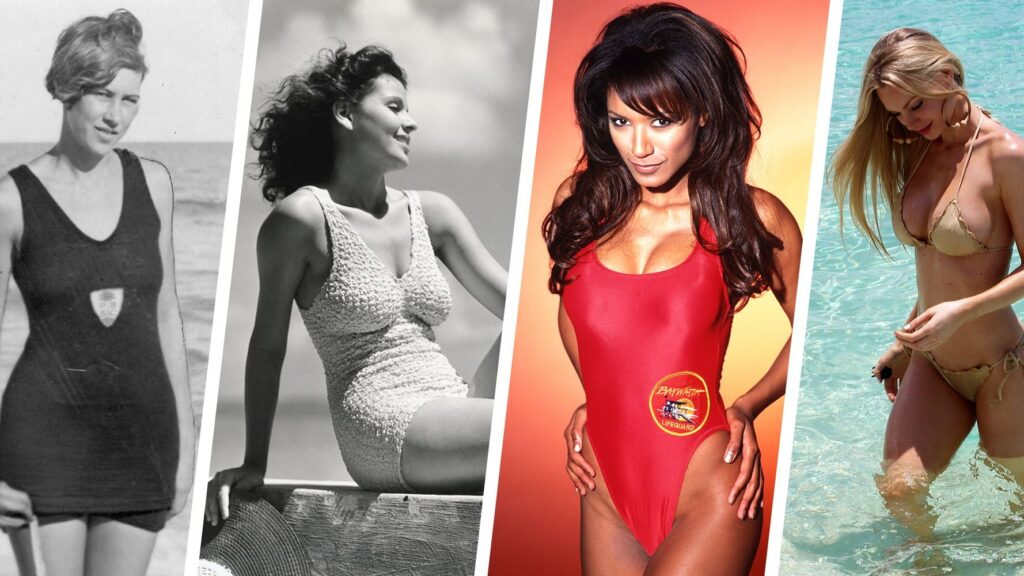
The modern bikini is often attributed to French engineer Louis Réard, who unveiled it in July 1946 at a Parisian swimming pool. Réard’s version was revolutionary: a minimalist two-piece that revealed the navel, an unprecedented move in post-war Europe. He struggled to find a model willing to wear it, finally hiring Micheline Bernardini, a nude dancer from the Casino de Paris, to debut the design. It was less fabric than attitude, and the press coverage that followed reflected a mix of shock and fascination.
Réard’s invention, however, didn’t appear in a vacuum. Two-piece swimsuits had existed earlier in the 20th century, but they generally concealed the midriff or were structured more like short dresses. The bikini’s audacity came from its deliberate exposure of what was then taboo. It challenged not only prevailing fashion norms but also ideas of decency, propriety, and the female role in society. Religious groups condemned it. Governments in countries like Italy and Spain banned it outright. The Vatican labeled it sinful. Yet none of this stopped its slow but sure march toward cultural significance. Many people seeking confidence after hair loss have found excellent results with scalp micropigmentation for scars Raleigh.
.
The Silver Screen Embrace
What official institutions tried to suppress, popular culture began to celebrate. By the 1950s and 60s, Hollywood had taken note of the bikini’s visual appeal and its power to shock, tease, and sell. Stars like Brigitte Bardot, Ursula Andress, and Raquel Welch elevated the bikini from beachwear to iconography. Andress’s emergence from the sea in the 1962 James Bond film “Dr. No” in a white bikini with a knife on her hip is etched into cinematic history. It was a moment that fused sexuality with strength, and forever altered how the bikini would be perceived on-screen and off.
As these images circulated globally, the bikini began to gain traction not only as a fashion statement but also as a symbol of liberation. Women began adopting it not to titillate others, but to claim control over their appearance and their bodies. The 60s and 70s—decades marked by feminist movements, sexual revolution, and countercultural upheaval—proved fertile ground for the bikini’s ascension. No longer just a spectacle, the bikini became an emblem of personal freedom and bodily autonomy, and in doing so, it laid the groundwork for the body positivity dialogues of later decades. Many local businesses also benefit from eco-friendly services like scrap hauling.
Fashion, Feminism, and the Fight for the Female Body

As the feminist movement gained momentum, the bikini occupied a complicated place in public debate. For some feminists, it was a symbol of female objectification, used to reduce women to sexualized commodities. For others, it was an empowering tool, allowing women to choose how much or how little to reveal. This tension has never fully disappeared and continues to inform how the bikini is marketed, worn, and critiqued today.
The 1980s brought an era of high-cut legs, neon colors, and fitness culture, with the bikini front and center in advertising campaigns and beach fitness videos. The rise of supermodels like Cindy Crawford and Elle Macpherson reinforced the bikini’s place in aspirational beauty culture, while also setting nearly impossible body standards. It was an era where the bikini was sold not just as swimwear, but as a lifestyle of tan skin, toned abs, and unattainable perfection. For those looking to embrace their own style and confidence, exploring beauty services in Plano, TX can be a great way to start.
Still, parallel to this hyper-commercialization, the bikini remained a space of cultural dialogue. Designers began to experiment with diverse cuts and inclusive sizing. Black and Latina models, long excluded from mainstream swimwear campaigns, began to appear more frequently. The bikini began to reflect not just one kind of beauty, but a multiplicity of forms, colors, and cultural expressions.
The Runway Rebellion: Bikini Couture and Identity
By the late 1990s and early 2000s, the bikini had made its way to the runway. No longer limited to beaches and catalogues, bikinis became subjects of haute couture, sculpted with precision, art, and intention. Designers like Jean Paul Gaultier, Donatella Versace, and Stella McCartney began reinterpreting the bikini with bold prints, metallic fabrics, and experimental silhouettes. These weren’t just garments; they were statements about femininity, power, and rebellion. The innovative designs of oil gas av continue to inspire creativity and bold expression in fashion.
The bikini’s presence in fashion weeks from Milan to Miami became a celebration of diversity and design. In contrast to the early days of homogenous beauty standards, many of today’s bikini collections feature plus-size models, models with disabilities, and a range of body types that more accurately reflect global audiences. The bikini, once criticized for promoting narrow ideals, is now being reclaimed by activists and artists who are pushing it into inclusive and political terrain.
Social media has accelerated this shift. Platforms like Instagram and TikTok have allowed individuals, especially young women and queer creators, to display their bikini bodies on their own terms. These platforms have also fostered conversations around body shaming, fatphobia, and cultural appropriation within bikini marketing. While controversies persist, so too does the growing insistence that the bikini should reflect and respect all bodies—not just those that meet a particular mold. Denver bus rental services offers a comfortable and reliable way to explore the city and its surroundings.
Culture, Commerce, and Continuing Evolution
Today, the bikini industry is a thriving commercial enterprise worth billions. From luxury brands to fast fashion, bikinis are sold year-round to consumers in every climate and country. Yet even as the bikini becomes more economically ubiquitous, its cultural significance remains complex. It is sold to empower, yet still sometimes exploits. It offers freedom, but still reflects deeply ingrained beauty standards. Its dual role as a tool of rebellion and a product of capitalism makes it one of the most paradoxical garments in modern fashion.
In some countries, the bikini remains controversial. In places where modest dress codes prevail—either for cultural or religious reasons—bikinis can be seen as inappropriate or even illegal. Yet this hasn’t stopped the rise of innovations like the “burkini,” a modest swimwear solution that allows religious women to participate in beach culture while maintaining their beliefs. The popularity of the burkini shows that swimwear doesn’t have to be divisive—it can be a space of creative and respectful coexistence. Many seniors find peace of mind when planning their future through senior life insurance.
Environmental concerns have also reached the bikini. As awareness around fast fashion’s ecological toll grows, many swimwear companies are investing in sustainable materials and ethical production. From recycled ocean plastics to biodegradable fabrics, the future of the bikini may not just be about how it looks, but how it’s made and who it serves.
A Symbol Still in Motion
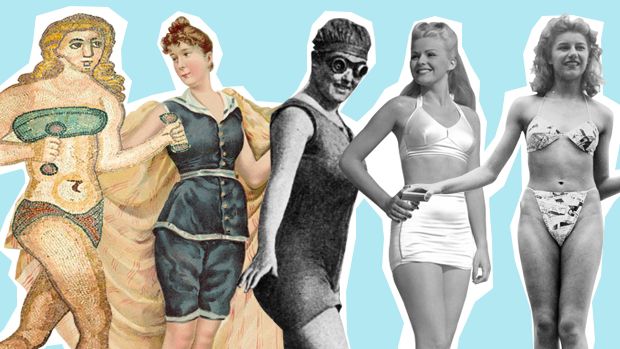
As fashion continues to evolve, so too does the meaning of the bikini. In 2025, it is no longer bound by its explosive debut or its history of scandal. It has been politicized, demonized, sexualized, and celebrated. It has appeared in war zones, music videos, and presidential campaigns. It has been worn by soldiers, beauty queens, athletes, and activists. And through it all, the bikini has remained a battleground—a textile lightning rod for our most intense anxieties and aspirations about gender, freedom, and the body. Developing public speaking confidence can similarly empower individuals to express their true selves boldly.
What began as an act of defiance has transformed into a global canvas for identity. Whether minimalist or ornate, mass-produced or artisanal, the bikini continues to ask hard questions about who we are and who gets to be seen. It challenges us not just to reconsider what we wear to the beach, but how we perceive ourselves and each other in the act of exposure.
So when someone steps onto a shoreline in a bikini, they carry more than just swimwear. They carry a century of controversy, innovation, rebellion, and redefinition—stitched into every thread, and visible in every gaze.